Saturday, August 3, 2019

The Journey begins in Peru

No promises to do this everyday but I will try, busy schedule and weak internet,
We arrived this’s morning and are getting acclimated,
Our program begin in earnest tomorrow as we will visit different areas where Unbound is working at giving people a hand up, not a hand out.There a several. Interesting initiatives among the sponsored people.

 The pictures below show St. Francis Solanus Retreat Center and some of the nearby homes standing precariously (I think) on hillsides.
Al
St. Francis Solanus Retreat Center


Thursday, August 1, 2019

A New Direction

   As I write I imagine that some of my regular blog readers have thought that my blogging days are over.  They almost were.  I was running out of gas, new thoughts and ideas. Also, I wanted to avoid the vitriol afflicting our society and passing over the internet.

  I have decided, for the time being at least, to use this blog to offer folks a glimpse into my life and ministry.

   For almost thirty-two years I have been an itinerant preacher, preaching over 500 parish missions, several retreats for priests and religious and a number of days of prayer and recollection. For the past 3 years I have preached weekend campaigns for Unbound, a wonderful Catholic charitable organization that invites people to sponsor children and elders in various poor countries. Every one of these events had given me the opportunity to meet some interesting people and more importantly to experience God's action in many lives.

   Since I last wrote on this blog I have been in Florida, Utah, Georgia, Mississippi, Alabama, North and South Carolina, Hawaii, Texas and North Dakota.  There are interesting people everywhere. I have been with priests from Vietnam and Zambia as well as several Latin American countries.  I have met 2 beekeepers and one wine maker.  Also, and most importantly I have had a glimpse into the life of the Church.  If one takes the image of the Church given by the media we are dying and ridden by scandal.  I don't want to minimize the impact of the sex abuse scandal.  It is real. It has driven people away, but I am also meeting many folks who say that their faith is becoming stronger because the scandals have caused them to go deeper in their living of the faith. 

   Another point that I would make strongly is that we are an immigrant and diverse Church.  There are few "nones" (those who believe in God but have no Church affiliation) among the Latino, Filipino, Vietnamese populations, to mention the most predominant immigrant groups. There are young families and children in these groups and they are the future of the Catholic Church in America, just as Irish, Italian, Polish and German immigrants were in previous generations.

   Unfortunately most people, including practicing Catholics, associate Church with clergy. The Laity my friends are the Church too and these days I think they are the strength of the Church.

   All of the above are my own impressions, not based on any formal sociological study, but I believe them to be true.

   I have mentioned Unbound in this article and in previous ones.  I will see more about my experience with them in the future.  In fact, the next time I write will be next week from Peru where I will be on an Unbound awareness trip which will include meeting with Anthony, a young man that I am sponsoring.

Thursday, January 31, 2019

I Have Done What Is Mine to Do,May Christ Teach You What is Yours to Do.

  Our friary community has just finished a retreat presented by Ray Bucher, OFM.  The theme of the retreat was the spirituality of aging.  Interestingly enough I had to pass up the last day of the retreat to have a colonoscopy.  I have had several.

   As well as offering me some valuable insights on aging the time has afforded me the opportunity to refocus the aim of my life and ministry.

    Ray, our retreat director, cited, among others, a work by Sr. Joan Chtister, OSB, The Gift of Years: Growing Older Gracefully.  I won't be using this entry to offer a workshop on that subject, but I have begun to read the book and one line that jumped out to me is this "Life after sixty-five is not a pathology. It is  whole new look at what life can be at this stage".

   Those words express what I have been feeling lately. So, what can life be for me?  In spite of what I consider to be minor health issues for my age I am living a dream, preaching the Word of God and living in a wonderful Franciscan community. At the same time there has been an unease in me lately, an unease about the condition of our world, our country and our Church. You can guess the reasons why. Unfortunately my presence on social media has drawn me off course a bit.  Last week a very good friend of mine visited our friary for a few days.  She pointed out that I was getting of course, swallowed up in the anger of the present moment.  I resisted her advice at first but upon reflection realized that my role, my purpose, at this time in my life and ministry, is not to try and correct all the evils of the world, though I must walk the fine line of being aware of them, but rather in the midst of them to remind people of the basic message of Jesus" love and his commandment to love one another. This is what I do well.

   This does not mean that I will back off of my basically Catholic and Christian vision of respect for life at every stage, respect for the unborn, those already born, people of every race and tongue and faith, etc., but at this stage I see my calling as stepping a bit outside of the political realm and simply reminding people of Jesus message to love our neighbor, whoever and whatever that neighbor may be, not just the neighbor next door, but all people.
   
   For most of my life in active ministry I have served in poor or working class areas, as well as serving the poor in Bolivia.  In recent years I have traveled to Honduras and El Salvador and seen first hand the effects of poverty and government oppression that people  there experience. The solution of the problems experienced by the poor is beyond me.  What I can do is A:  Invite everyone to share Christ's love in any way possible.  B. Be aware of the suffering of so many.  C.  Do what I can to help the poor.
 
   Over two years ago I came across Unbound, a Catholic organization our of Kansas City, that invites people to sponsor children and need elders in 18 different poor countries. They are helping over 300,000 people at the present time, not just offering a handout, but a hand up and empowereing them towards a better life.I visit parishes for them and invite people to sponsor.  Perhaps you, my reader,will consider becoming a sponsor. Go to Unbound.org/MyOutreach/FrJohnAnglinOFM. 

   I am still preaching 12-15 parish missions a year, preaching the basic Gospel message of love and mercy.  What a wonderful life I have at this stage. I pray that it continues.  When more diminishment comes it will be in God's hands.

   Finally, fear not growing older. Welcome what is next as  new stage of life. And do keep in mind the title of this blog entry which are the final words of St. Francis to the first friars. "I have done what is mine to do. May Christ teach you what you are to do."


Monday, January 7, 2019

We Three Kings--A Revelation

   Yesterday we in the Western Church (Roman Catholic and Protestant) observed the Feast of the Epiphany (Greek for Manifestation or revelation) and heard the story of the visit of the magi to Bethlehem.  The Orthodox Church celebrated Epiphany as the Baptism of Jesus, which we in the West will celebrate this coming Sunday.  In addition the story of the Wedding Feast at Cana (recalled in 2 weeks) was noted in the early Church as an Epiphany Feast because there Jesus is revealed as Son of God.

   All three of these events have profound meaning but to me the account of the visit of the Magi is rich and filled with meaning.  It has also inspired several spinoff stories such as Ahmal and the Night Visitors which I took the time to view last night.  I highly recommend it.

    Did this event really happen?  I like to think that it did in spite of the fact that there have been many embellishments.  Matthew's Gospel 2:1 simply tells us that magi from the east arrived in Jerusalem asking the whereabouts of the newborn king. Notice that it does not say that they were kings, nor does it say there were 3. It was most likely easy to designate 3 as the number because there were 3 gifts--gold,frankincense and myrh.Early Church writers tell us that the gold was for Jesus as a king, the frankincense was to worship him as God and the myrh was for his burial.  Also as early Christians who were still practicing Jews hear the Scriptures read in the synagogues they heard, for example, from the prophet Isaiah, "All from Sheba shall come bearing gold and frankincense, and proclaiming the praises of the Lord." (Is 60)  Psalm 72:10 says "May the kings of Tarshish and the Isles bring tribute, the kings of Sheba and Sela offer gifts."

   In any event the meaning of the event is that Christ is revealed as Messiah not only for Israel but for all  peoples.  For me this does no mean a triumphalist imposing of Christianity on all bur rather is a call to realize that God loves all and in Christ draws all to himself.  Also I see the star as the light that draws all to Christ who is the Light of the world and who chooses to dwell in us that we may be light.
Finally in the 3 gifts, indeed symbolic but most importantly sign of generosity.  This account is what inspired the practice of Christmas gifts (which in many countries waits until January 6, but most importantly it should inspire us to be generous with the gifts that God has given us. The above mentioned story of Ahmal certainly points us in that direction.

Wednesday, October 17, 2018

Wisdom, The Missing Ingredient

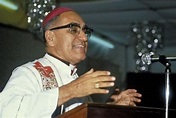
St. Oscar Romero

This past Sunday Pope Francis canonized 7 new saints.  Two of them had a an effect on my life--St. Oscar Romero and Pope St. Paul VI.

   I entered the seminary in September, 1962, two months after Paul VI was elected Pope.  I had seen this man, Cardinal Montini of Milan,  a few years earlier as a member of my parish band, St., William's in Dorchester.  Cardinal Cushing of Boston had invited our band to greet him with our music.  More importantly he was the Pope during my entire time in the seminary and in my early years as a priest.
Pope St. John XXIII had convened the Second Vatican Council a few years earlier but it was Paul VI
Pope St. Paul VI
who was entrusted with the task of implementing
 the council.  Keep in mind that he had the authority, upon the death of his predecessor, to end the council.  He did not do that.  He steered the Church through the completion of its documents and saw them get put into practice.  That was no easy task as there was controversy over how to carry on in addition to the fact that the turmoil of the 60's was taking place all over the world.  Both liberals and conservatives may have been dissatisfied with particular decisions that he made but in the end he carried out one of the principle tasks for any Pope--to maintain the unity of the Church.  He did that.  Yes, there were factions and arguments but no major breaks in Church unity.  In fact he promoted a healthy ecumenism and made progress in our relationship with the Orthodox Churches.

    Our other saint is St. Oscar Romero, a much different person than Pope Paul, but one who was influenced by him.  He was appointed auxiliary bishop of San Salvador in 1970 and named archbishop in 1977 after having been bishop of Santiago de Maria for 3 years. During the late 70's and into the 80's I was serving in poor areas in the Bronx and in Buffalo, NY. I was becoming increasingly aware of the importance of the Church's social justice teachings.  In addition to that I was meeting with some of our province's missionaries from Brazil and Bolivia who told stories of the struggle for justice in Latin America.  I also heard for the first time the phrase, "fundamental option for the poor."  I read the works of some of the liberation theologians who inspired that phrase.  I also studied Pope Paul's encyclical Popolorum Progressio which outlined the Church's teaching on social justice.  As Archbishop of San Salvador Oscar Romero, who always had a love for the poor, struggled with the works of some of these theologians.  Were they communist?  Were they too political?  The Vatican as well shared this struggle. As for myself I was inspired by all of it and felt the call to serve as a missionary in Bolivia.

   Something happened that opened the eyes of our new saint.  Beyond whatever certain theologians were writing in books Archbishop Romero's heart was moved by the extreme violence and the slaughter of thousands of innocent civilians in his own country.  He began to speak out strongly against the Salvadoran government and on March 24, 1980 he was assassinated while celebrating Mass at the chapel of the Hospital of Divine Providence in San Salvador where he resided. I remember the day when that awful event was announced on the news in the friary where I was living in Buffalo, NY. One of the high points of my life came last December when I got to preside at Mass at the very altar where he was killed. This happened while I was traveling with a group from Unbound.  (See Unbound.org)  What struck me on that day was the realization of what a hero he was to the Salvadoran people who always considered him a saint.

   The canonization of both of these holy men touched me because of the place they played in my own life.  As I was preaching last Sunday the first reading was from the Book of Wisdom.  It spoke of Wisdom as a special gift.  As different as these two men were I believe what they had in common was the gift of Wisdom.  In Pope Paul's case the wisdom to take the council documents and guide the Church through their implementation and in Romero's case the Wisdom to see clearly beyond the cloud of ideologies and to speak the truth to power.  They killed his body but his spirit lives on, not only in El Salvador but to the four corners of the world.

   An article that I read recently said that since 1900 the information accessible to humankind has doubled in each decade since.  Folks, we do not lack for knowledge or information, or even for intelligence. In the world, the Church and our nation today WE LACK WISDOM, the ability to apply the knowledge properly.

St Oscar Romero, Pray for us.  St. Paul VI, pray for us.


Dec. 5, 2017. Mass At the altar where St. Oscar Romero was killed.


Tuesday, September 25, 2018

Go and Rebuild My House

Cross at Church of San Damiano in Assisi
   We Franciscans will soon be celebrating the Feast of our founder, Francis of Assisi. We will be celebrating this feast deeply aware of the crisis that is facing our Church today.  We are also aware that when our order was founded the Church was also in deep crisis. Several groups of people had left the Church out of disillusionment with the abuse of power even at the highest levels of the hierarchy. They sought to live the Gospel life simply and authentically. I won't detail that here or suggest that one crisis was worse than another.  What I would like to offer is this.  The call that Francis received from the Lord as he was praying before the cross in a run down chapel outside the walls of Assisi is as timely today as it was then.

  As his early biographers recall as Francis was kneeling in prayer he felt the Lord speaking to him from the cross in these words.  "Francis, Go and rebuild my house which, as you see, is falling into ruin."

   He and his companions (They were not yet established as an order, and they were lay people.) heeded this call and began to literally repair several small churches in the Assisi region. Within a short time they realized that God was not calling them to repair building but to spiritually renew the Church of those times.  Within a few years the results of that renewal were evident.  Francis insisted on being loyal to the Church.  He would not leave. At the same time he saw his mission as living the Gospel simply within the Church.  His protest was not in the form of demonstrations and marches or letters to the Pope and bishops but simply the lived example of his followers.

    A few years after this wonderful encounter with the Lord Francis received verbal approval for his order from Pope Innocent III.  Our order at the beginning though was more of a movement than a canonical institution.  The Franciscan family included people who did not profess formal religious vows (what are now called the Secular Franciscans) as well as those who did.  Most of the earliest ones who did take vows were not priests.

  There has been a lot of discussion lately about needed structural reform of the Church, especially the need for giving lay people a greater voice in decision making, about moving away from a model of hierarchy that goes back to the time of the emperor Constantine.  I agree with all of those desires in the strongest terms.  At the same time can we not all commit ourselves to rebuilding the house of the Lord by committing ourselves to living the Gospel more radically, by heeding the call of the Second Vatican Council to a universal call to holiness, a call which means that  the laity are not any less or more called to holiness than the clergy.  I do not propose this as a weak, pious alternative to the hard work that needs to be done to reform Church structures, but rather as the spiritual fire which will spark that reform.


Wednesday, August 15, 2018

The Assumption of Mary: Hope and Challenge

   Today is a big day for me and for the Church, the celebration of the Assumption of Mary. 55 years ago today I put on the Franciscan habit for the first time. A year and a day later I took my first vows on August 16, 1964.

  Now that that has been stated some might be thinking that I am out to lunch and out of touch.  With all that is going on in the world and in the Church what meaning could this Feast have? My answer--a great deal of meaning.

   The belief that upon her death the Virgin Mary was taken body and soul into heaven, though declared a doctrine by Pope Pius XII in 1950, is a belief that has been shared since the earliest days of the Church.

  What this doctrine gives us is a sense of the beauty and dignity of the human body.  What Mary experiences immediately we believe and hope that in the fullness of time we too will experience not just the salvation of our soul, but bodily resurrection and redemption.

   There is so much violence in our world--war, terrorism, abortion, abuse of women and children, sadly the latter by priests bishops and cardinals.  The hope of this feast is that in God's time the ravages done to human bodies (and spirits) will be healed.

   Fine and well, but what about now?  That is where the challenge comes in.  If we believe that God became enfleshed in Jesus, and that his mother is taken to heaven body and soul, we cannot see the body as rubbish, as OK to damage.  We cannot see the body and human sexuality as dirty.  We must seek justice and healing for everything that attacks the body or misuses it.  That is why our Church teaches respect for human life from conception until natural death.  That is also why we need to clean up the mess that does not seem to go away with the sex abuse crisis.  Bishops and priests must be held responsible.  Consequences must be meeted out even at the highest levels and lay people, not clergy, must lead the investigations. 

   A radical sense of the dignity of the boy has been growing in the Church.  That is why Pope Francis has said that capital punishment is not acceptable, nor is human trafficking or violence in any form or any attack on human dignity. 

  Finally this belief calls us to develop a healthy sense of human sexuality.  Over the years we have been bouncing between rigidity and Puritanism to the hedonism and anything goes mentality of today.

  I have touched on a number of issues here. To be sure a more nuanced approach to all of them is necessary.  I just have sought to name to issues and to say that underneath it all we need to realize that our Redemption in Christ is not just spiritual.  It is bodily.

Moving Out and Moving Ahead Cautiosly